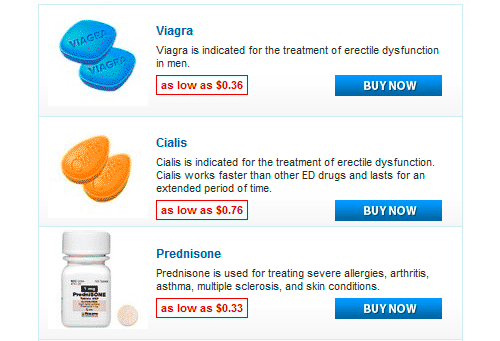

Consider starting with a consultation with your doctor to discuss Cialis and its suitability for you. This ensures you receive personalized advice tailored to your specific health profile and needs. Your doctor can help you understand potential side effects and interactions with other medications you might be taking. They can also guide you towards the appropriate dosage for optimal results.
Dosage varies depending on individual needs and should always be determined by a healthcare professional. Common dosages range from 5mg to 20mg, taken as needed. However, a daily low-dose option (2.5mg or 5mg) is available for continuous treatment of erectile dysfunction, providing daily readiness. Remember, adherence to prescribed dosages is critical for effectiveness and safety.
Important Note: Cialis is a prescription medication, and obtaining it without a valid prescription is illegal and potentially dangerous. Always seek medical advice before beginning any new medication, including Cialis. This ensures you are using the medication safely and effectively, while also minimizing any risks associated with potential side effects or interactions with other medications.
Beyond the basics: Explore different formulations of Cialis–such as tablets or daily dosage options–to find the best fit for your lifestyle and needs. Discuss these options with your doctor to make an informed choice. Remember, open communication with your doctor is key to successful treatment.
- Cialis: A Detailed Guide
- Understanding Cialis: Mechanism of Action and Uses
- Potential Side Effects and Drug Interactions of Cialis
- Common Side Effects:
- Less Common but Serious Side Effects:
- Drug Interactions:
- Cialis vs. Other ED Medications: A Comparison
- Duration and Onset of Action
- Side Effects
- Cost and Availability
- Specific Considerations
- Obtaining a Prescription and Safe Use of Cialis
- Understanding Your Prescription
- Safe Usage Guidelines
- Storage and Disposal
- Follow-Up Appointments
Cialis: A Detailed Guide
Consult your doctor before using Cialis. This medication isn’t suitable for everyone.
Cialis, a phosphodiesterase-5 (PDE5) inhibitor, treats erectile dysfunction (ED) and benign prostatic hyperplasia (BPH). It works by increasing blood flow to the penis, aiding in achieving and maintaining an erection. For BPH, it relaxes muscles in the prostate and bladder, improving urinary flow.
The recommended starting dose is 10mg, taken as needed, at least 30 minutes before sexual activity. Your doctor may adjust this based on your response and health conditions. Don’t exceed the maximum daily dose of 20mg.
Common side effects include headache, flushing, nasal congestion, muscle aches, and back pain. These are usually mild and temporary. More serious side effects, though rare, include vision changes (sudden vision loss or blue tint) and hearing loss. Seek immediate medical attention if you experience these.
Cialis comes in two primary forms: as-needed tablets and daily tablets (low dose). Daily tablets maintain a consistent level of the medication in your system, making you ready for sexual activity at any time. Discuss the best option for you with your physician.
Avoid grapefruit juice while taking Cialis, as it can increase the drug’s concentration in your bloodstream. Also, be aware of potential interactions with other medications, especially nitrates. Provide your doctor with a complete list of your current medications and supplements.
Cialis isn’t a performance enhancer; it only assists men experiencing ED or BPH. Maintaining a healthy lifestyle, including exercise and a balanced diet, contributes significantly to overall sexual health.
Remember, this information is for educational purposes only and doesn’t replace professional medical advice. Always consult your doctor before starting any new medication.
Understanding Cialis: Mechanism of Action and Uses
Cialis works by increasing blood flow to the penis. This happens through inhibition of phosphodiesterase type 5 (PDE5), an enzyme that breaks down cyclic guanosine monophosphate (cGMP). Increased cGMP levels relax smooth muscles in the penis, allowing for improved blood flow and facilitating an erection.
The primary use of Cialis is to treat erectile dysfunction (ED). It helps men achieve and maintain an erection sufficient for satisfactory sexual intercourse. The medication is taken as needed, typically 30 minutes to 2 hours before sexual activity, though some men find it effective for up to 36 hours. This longer duration of action differentiates Cialis from other ED medications.
Beyond ED, Cialis is also FDA-approved for treating benign prostatic hyperplasia (BPH), a condition characterized by an enlarged prostate. By relaxing the smooth muscles in the prostate and bladder, Cialis can improve urinary flow and reduce symptoms like frequent urination and nighttime awakenings. Note that Cialis for BPH is usually prescribed at a lower dose than for ED.
Before using Cialis, consult your doctor. They can assess your health status, discuss potential side effects (such as headache, muscle aches, back pain, and nasal congestion), and determine the appropriate dosage. Cialis interacts with certain medications, so inform your physician about all your current medications and supplements.
Cialis is a prescription medication. Do not use it without a doctor’s prescription. Obtain it only from legitimate pharmacies to ensure you are receiving a safe and effective product.
Potential Side Effects and Drug Interactions of Cialis
Always consult your doctor before starting Cialis, especially if you have pre-existing health conditions.
Common Side Effects:
- Headache
- Facial flushing
- Nasal congestion
- Muscle aches
- Back pain
- Indigestion
These side effects are usually mild and temporary. If they persist or worsen, seek medical attention.
Less Common but Serious Side Effects:
- Sudden vision loss
- Hearing loss
- Prolonged erection (priapism)
- Heart attack or stroke
Seek immediate medical help if you experience any of these.
Drug Interactions:
Cialis can interact negatively with certain medications. Specifically, avoid combining Cialis with:
- Nitrates (used to treat chest pain): This combination can cause a dangerous drop in blood pressure.
- Alpha-blockers (used to treat high blood pressure or enlarged prostate): This combination can also lead to significantly lowered blood pressure.
- Certain antifungal medications (like ketoconazole and itraconazole): These can increase Cialis levels in your blood, potentially intensifying side effects.
- HIV protease inhibitors (like ritonavir and indinavir): Similar to antifungals, these can raise Cialis blood levels.
This is not an exhaustive list. Inform your doctor about all medications, supplements, and herbal remedies you are taking before starting Cialis to prevent potentially harmful interactions. They can assess your specific situation and determine if Cialis is safe for you.
Remember, this information is for educational purposes only and does not substitute professional medical advice. Always discuss your health concerns with a qualified healthcare provider.
Cialis vs. Other ED Medications: A Comparison
Choose the medication that best suits your needs and lifestyle. Cialis provides longer-lasting effects (up to 36 hours) compared to Viagra (4-5 hours) and Levitra (4-5 hours). This makes it ideal for spontaneous intimacy.
Duration and Onset of Action
Viagra typically takes effect within 30-60 minutes, while Cialis and Levitra may take a bit longer, sometimes up to 2 hours. However, Cialis’s extended duration often outweighs this slight delay. Levitra offers a middle ground, with a slightly faster onset than Cialis but shorter duration than Cialis.
Side Effects
Common side effects across all three medications include headache, flushing, nasal congestion, and indigestion. However, the frequency and severity can vary between individuals and medications. Discuss potential side effects with your doctor before starting any medication.
Cost and Availability
Cost varies depending on dosage, insurance coverage, and pharmacy. Generic versions of all three medications are available, often providing a more affordable option. Availability is generally widespread, but check with your local pharmacy for specific details.
Specific Considerations
Cialis is available in daily doses for continuous use, unlike Viagra and Levitra, which are typically taken as needed. This is a significant factor for those seeking consistent erectile function. Levitra may be preferred by individuals sensitive to certain side effects common with Cialis and Viagra. Your doctor can help you determine the best choice for your individual health profile.
Obtaining a Prescription and Safe Use of Cialis
Consult your doctor. They will assess your medical history and determine if Cialis is appropriate for you. Be open about all medications you take, including over-the-counter drugs and supplements. This ensures your doctor can identify potential interactions.
Understanding Your Prescription
Your doctor will prescribe the appropriate dosage based on your needs and health condition. Follow these instructions carefully. Do not adjust your dosage without consulting your doctor. Common dosages range from 5mg to 20mg, taken as needed.
Safe Usage Guidelines
Take Cialis approximately 30 minutes before sexual activity. Avoid consuming large amounts of alcohol, as this can reduce its effectiveness and increase side effects. Grapefruit juice can also interact negatively with Cialis. Inform your doctor of any heart conditions, high or low blood pressure, or vision problems before starting treatment. Cialis can cause side effects such as headache, flushing, muscle aches, and nasal congestion. Serious side effects are rare but require immediate medical attention.
Storage and Disposal
Store Cialis tablets in a cool, dry place, away from direct sunlight and moisture. Keep them out of reach of children and pets. Dispose of expired or unwanted medication according to your local regulations. Never share your medication with others.
Follow-Up Appointments
Attend follow-up appointments with your doctor to monitor your progress and address any concerns. Regular check-ups help ensure safe and effective treatment.